


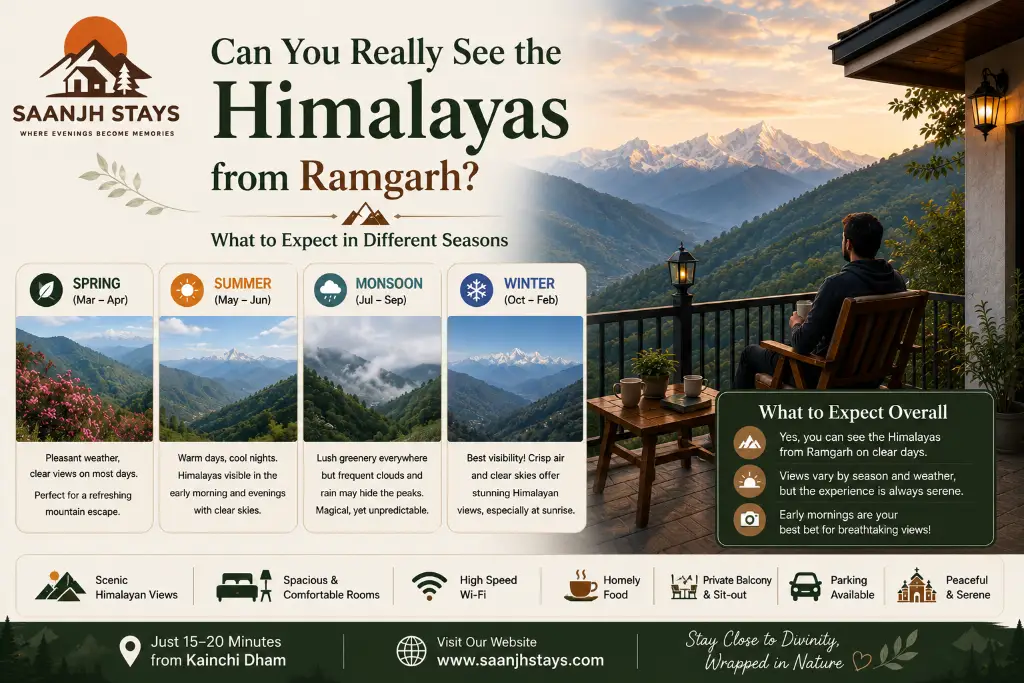
Yes, you can see the Himalayas from Ramgarh—and on clear days, the views can be spectacular.
From this quiet hill town in Kumaon, you can often spot snow-capped Himalayan peaks such as Nanda Devi, Trishul, and Panchachuli stretching across the horizon. However, visibility depends heavily on the season, weather conditions, and even the time of day. Some months offer crystal-clear mountain panoramas, while others bring mist, clouds, and lush green landscapes instead.
Known as the Fruit Bowl of Kumaon, Ramgarh is much more than a viewpoint. The region changes dramatically through the year, from blossom-covered orchards in spring and sharp Himalayan vistas in autumn to misty monsoon valleys and cosy winter mornings.
If seeing the Himalayas is high on your travel wishlist, understanding what to expect in each season will help you choose the right time to visit—and the right place to stay to make the most of those unforgettable mountain views.
Why Ramgarh Is Known for Himalayan Views
Ramgarh sits at around 1,789 metres above sea level, giving it a natural advantage for mountain views. Being higher up means it often stays above the haze that can block views in lower hill towns.
What makes Ramgarh special is how open and untouched it still feels. Instead of crowded markets and dense construction, you’ll find terraced orchards, pine-covered hills, and wide ridgelines that open up to the Himalayas. On clear days, you can spot famous peaks like Nanda Devi, Trishul, and Panchachuli shining on the horizon.
Places such as Tagore Top have drawn writers, artists, and nature lovers for generations because of these sweeping views. Even today, many travellers come to Ramgarh simply to enjoy peaceful Himalayan panoramas without the crowds often found in more commercial hill stations.
Can You See the Himalayas Throughout the Year?
One of the biggest misconceptions about mountain destinations is that visibility remains constant throughout the year.
In reality, the Himalayas are always there. What changes is the atmosphere between you and the mountains.
Factors that affect visibility include:
- Dust and atmospheric particles
- Humidity levels
- Rainfall
- Cloud cover
- Seasonal temperature changes
- Morning and afternoon thermal activity
This means some months offer incredibly sharp, high-definition mountain views, while others replace snow-capped horizons with drifting clouds, mist-filled valleys, and dense greenery.
Neither experience is necessarily better. They are simply different.
The key is choosing the season that aligns with what you want from your Ramgarh getaway.
Spring & Summer (March to June): The Best Season for Clear Himalayan Views
For many travellers, spring and early summer offer the best mix of clear mountain views, pleasant weather, and beautiful scenery. This is when Ramgarh truly lives up to its reputation as the Fruit Bowl of Kumaon.
Apple, peach, apricot, and plum trees bloom across the hills, adding colour to the landscape. On clear days, the sight of flowering orchards with snow-covered Himalayan peaks in the background is hard to forget.
What You Can Expect
- Clear Himalayan views on most days
- Pleasant weather for sightseeing and walks
- Blooming orchards across the region
- Great conditions for sunrise photography
A useful tip: the best mountain views are usually early in the morning, from sunrise until around 8:30 AM. As the day gets warmer, a light haze can make the peaks look less clear.
Why Spring Stands Out
Spring brings together two of Ramgarh’s biggest attractions at the same time—colourful fruit orchards and snow-capped Himalayan views. It’s a combination that few destinations in North India can offer.
Monsoon (July to September): Lush Green Hills but Limited Mountain Visibility
If seeing snow-capped Himalayan peaks is your main reason for visiting Ramgarh, the monsoon is usually the least reliable season. Clouds and rain often cover the mountains, and on many days the peaks remain hidden from view.
That said, monsoon brings a different kind of beauty. The hills turn incredibly green, the air feels fresh, and mist drifts through the valleys, creating a peaceful mountain atmosphere.
What Makes Monsoon Special?
- Lush green landscapes
- Fresh, clean mountain air
- Misty valleys and forests
- Beautiful cloud-filled views
- Seasonal waterfalls and streams
- Fewer tourists and quieter surroundings
Is Monsoon Worth Visiting?
Yes, if you’re looking for:
- Peace and quiet
- Slow, relaxed travel
- Nature and greenery
- Reading, writing, or remote work
- Better value stays
Maybe not, if your main goal is:
- Seeing snow-capped peaks
- Mountain photography
- Consistent Himalayan views
Monsoon may not offer the clearest mountain views, but it reveals a calmer, greener, and more peaceful side of Ramgarh that many travellers end up loving.
Autumn (October to November): The Sharpest Himalayan Views
If your main goal is to see the Himalayas as clearly as possible, autumn is the best time to visit Ramgarh.
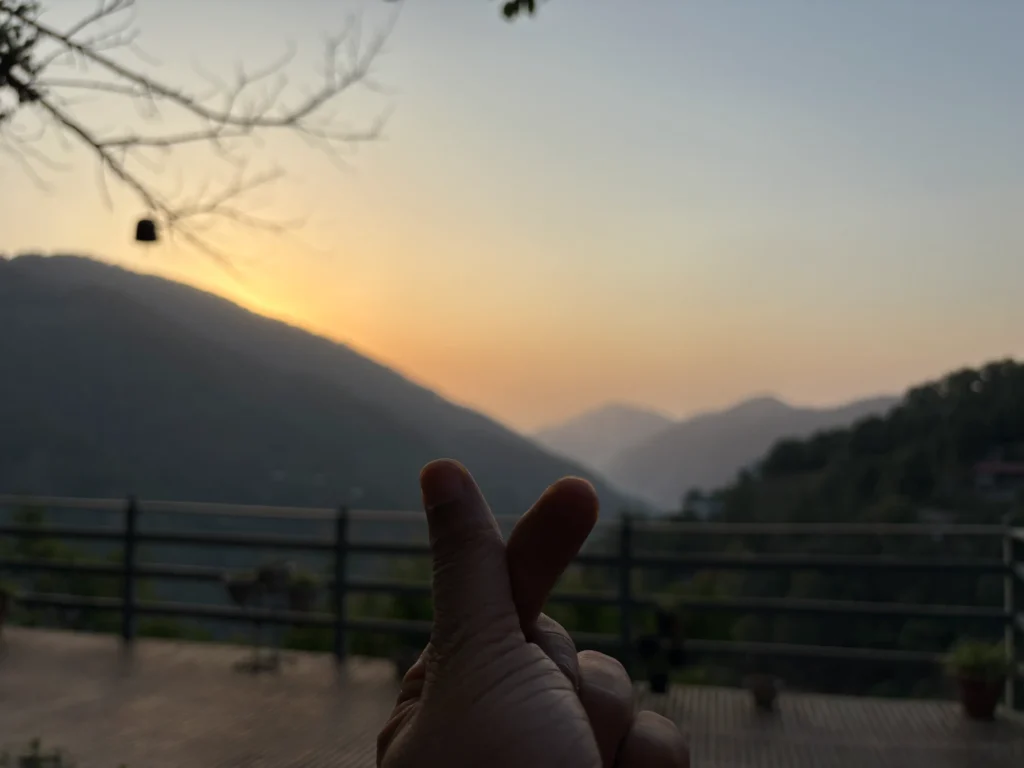
After months of monsoon rain, the air becomes much cleaner and clearer. With less dust and haze in the atmosphere, the snow-capped peaks look sharper, brighter, and more visible than at any other time of the year.
Why Autumn Is a Favourite
- Crystal-clear skies
- Excellent mountain visibility
- Beautiful sunrise views
- Sharp views of snow-covered peaks
- Fresh, green landscapes after the monsoon
Unlike summer, when the mountains can become hazy later in the day, autumn often offers clear views for much longer. That’s why October and November are considered the best months for mountain photography and sightseeing.
What Makes Autumn Special?
One of the first things visitors notice is how close the Himalayas seem to feel. On clear mornings, peaks like Nanda Devi and Trishul stand out sharply against the blue sky, creating some of the most memorable views Ramgarh has to offer.
Winter (December to February): Snow Peaks, Cosy Weather & Clear Skies
Winter in Ramgarh feels calm and different from the rest of the year. The air turns cold, mornings are crisp, and the Himalayan skyline often looks its sharpest during this season.
Ramgarh itself may see only light or occasional snowfall, but the higher Himalayan ranges nearby are usually covered in snow. This adds depth and brightness to the views, making the mountains stand out even more clearly against the sky.
What Travellers Can Expect
- Cold but very clear mornings
- Some of the best Himalayan visibility of the year
- Peaceful, quiet surroundings
- Very few tourists
- Clear night skies for stargazing
Winter is also perfect for slow travel. There is a simple joy in sitting wrapped in warm layers, sipping tea, and watching the first sunlight slowly touch the snow-covered peaks.
The pace of travel slows down here. Everything feels more still, more personal, and less rushed.
Things to Keep in Mind
Before planning a winter trip, it helps to be prepared:
- Nights get quite cold
- Warm woollens are necessary
- Frosty mornings are common
- Sunrise can feel near freezing
The comfort trade-off is worth it for many travellers, because winter often delivers some of the clearest and most striking Himalayan views of the entire year.
Best Time to Visit Ramgarh for Himalayan Views
If seeing the Himalayas is your top priority, here is a simple ranking:
| Rank | Season | Why Visit |
| 1 | October–November | Best overall visibility and photography conditions |
| 2 | March–June | Consistent mountain views and pleasant weather |
| 3 | December–February | Beautiful, clear skies with colder temperatures |
| 4 | July–September | Best for greenery, least reliable for Himalayan views |
For most travellers, October, November, April, and May offer the ideal combination of weather, visibility, and outdoor comfort.
Tips for Getting the Best Himalayan Views in Ramgarh
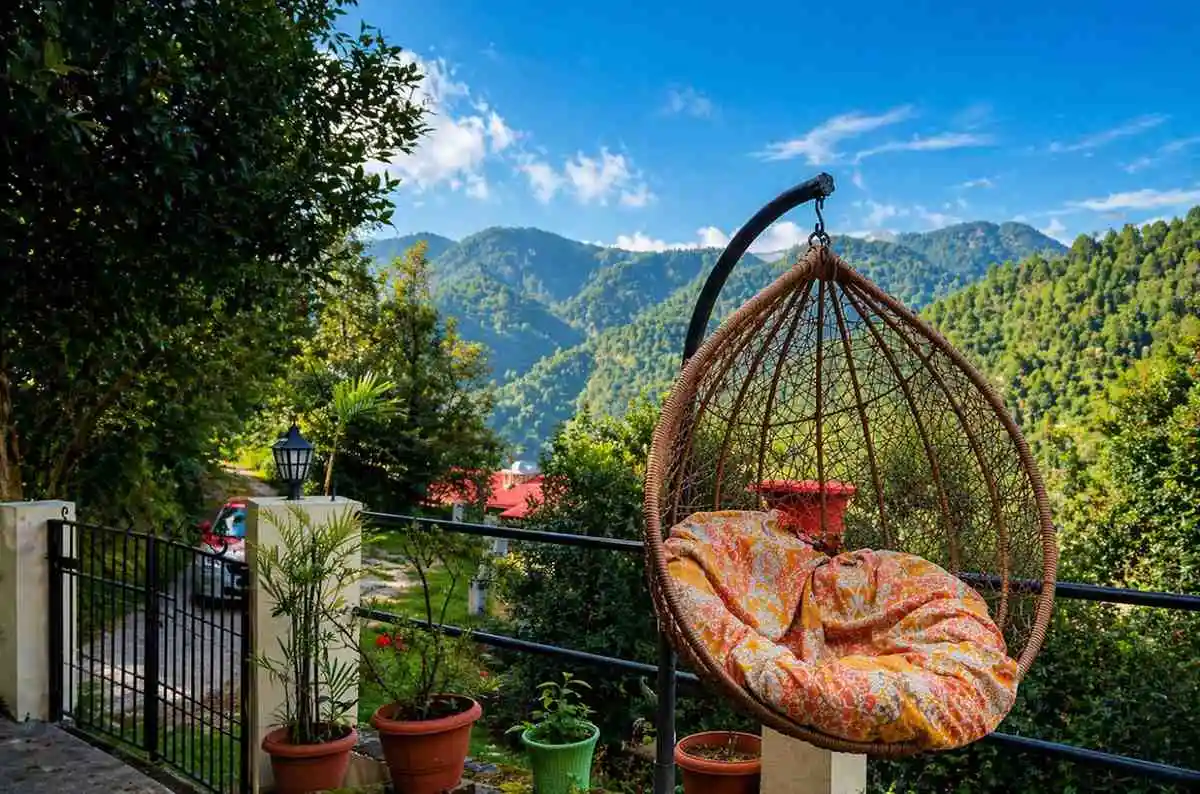
Even during the best season, a few smart decisions can dramatically improve your chances of seeing the mountains.
1. Wake Up Before Sunrise
The clearest visibility often occurs between dawn and early morning.
2. Stay at Higher Elevations
Properties positioned on ridges generally enjoy better sightlines than accommodations located deeper in the valleys.
3. Visit After Rainfall
A clear day following rainfall often produces exceptional visibility.
4. Carry Binoculars or a Zoom Lens
You’ll appreciate the ability to observe distant Himalayan details.
5. Check Weather Conditions Before Travel
Mountain weather changes quickly, and visibility forecasts can help set realistic expectations.
Where to Stay in Ramgarh to Enjoy the Views
While the season shapes your mountain views, the right stay decides how deeply you experience them. At Saanjh Stays, our villas in Ramgarh are built around the landscape, not just placed on it.
Sukoon by Saanjh Stays — Best for Himalayan Views
If your main reason for coming to Ramgarh is the mountains, Sukoon is designed for you. This private 2BHK villa offers uninterrupted Himalayan views from a dedicated gazebo, so you can watch sunrise over the peaks without stepping out.
Why guests love Sukoon:
- Private 2BHK villa
- Dedicated mountain-view gazebo
- Pet-friendly stay
- Ideal for couples and small families
- Perfect for sunrise and photography
For travellers searching for a true Himalayan view villa in Ramgarh, Sukoon delivers exactly that experience.
Buransh by Saanjh Stays — Best for Nature Lovers
Buransh is about slowing down and staying close to nature. Surrounded by orchards and forest trails, this cosy 2BHK cottage gives you a quiet, grounded experience of Kumaon life.
Highlights:
- Surrounded by orchards
- Nearby forest walking trails
- Warm, cosy cottage feel
- Ideal for families
- Authentic local setting
In spring, when the orchards bloom, Buransh feels especially alive and peaceful.
Vanyara by Saanjh Stays — Best for Groups
For families and larger groups, Vanyara offers space without compromise. This 4BHK villa is designed for shared time together while still keeping privacy intact.
Features include:
- Large private garden
- Bonfire area for evenings
- Pet-friendly stay
- Spacious indoor and outdoor areas
- Ideal for group stays and celebrations
Whether it’s winter stargazing or autumn mountain views, Vanyara gives groups a comfortable base to experience Ramgarh together.
Quick Villa Comparison
| Villa | Best For | Key Experience |
| Sukoon | Himalayan Views | Mountain-view gazebo and panoramic vistas |
| Buransh | Nature & Orchards | Slow travel surrounded by Kumaon’s fruit landscapes |
| Vanyara | Groups & Families | Spacious gatherings, gardens, and bonfire evenings |
Final Thoughts
So, can you see the Himalayas from Ramgarh?
Yes—you can. Ramgarh gives you clear Himalayan views on good days, but what you see always depends on the season and weather.
Autumn and early summer usually bring the sharpest mountain views. Monsoon hides the peaks but fills the hills with mist and greenery. Winter feels crisp and clear, with bright skies and quiet mornings.
In the end, Ramgarh is less about one fixed view and more about changing moods of the same mountains. And where you stay shapes how deeply you experience it at Saanjh Stays.
FAQs About Seeing the Himalayas from Ramgarh
Yes, but not everywhere. It depends on whether your stay is placed on an open viewpoint or inside a dense valley area.
No, they change a lot. Even the same spot can look very different depending on light, clouds, and air clarity.
Early morning is usually best. After sunrise, the heat from the valley can make the peaks look less sharp.
Not fully. Good seasons improve your chances, but weather still decides how clearly the peaks appear each day.
It offers both, but not always together. Some days are about clear peaks, other days are more about mist, silence, and greenery.