


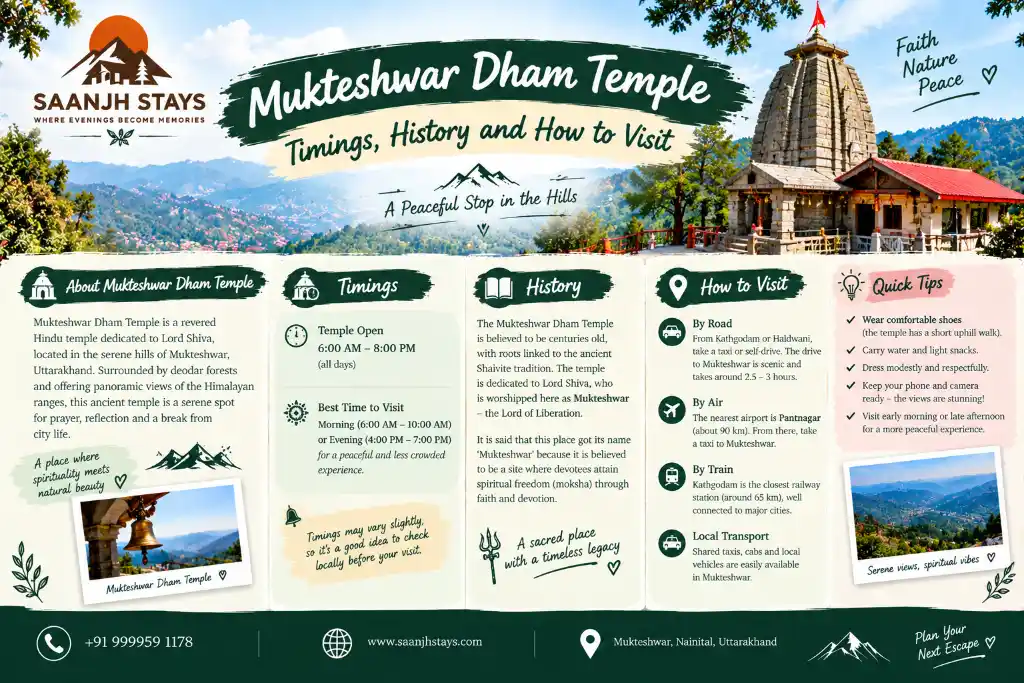
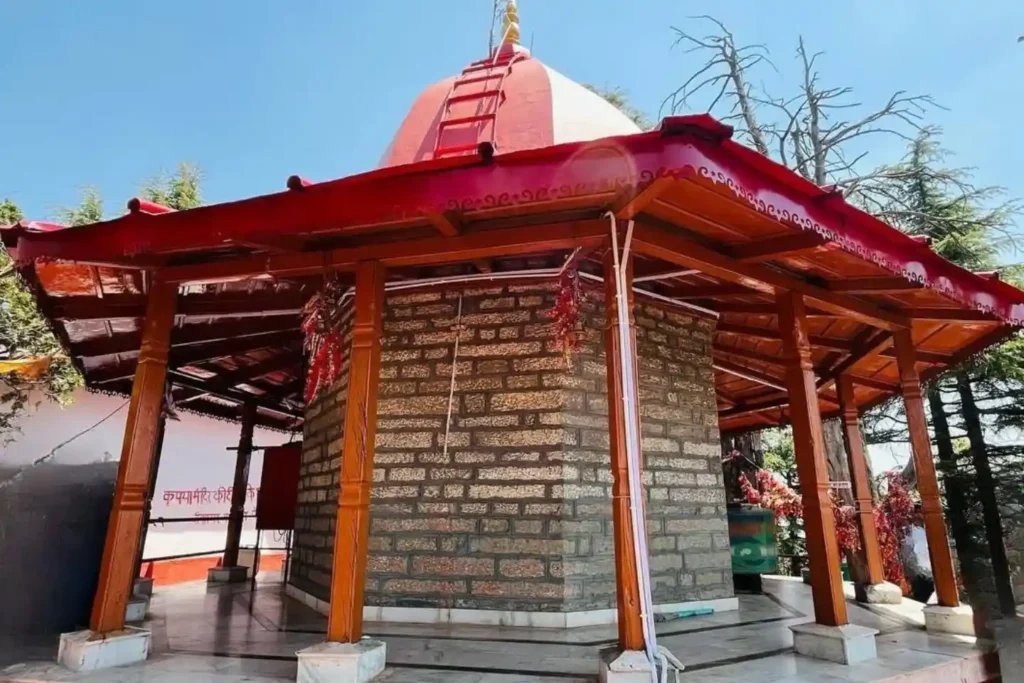
Quick answer Mukteshwar Dham Temple: Mukteshwar Dham is a Shiva temple about 350 years old at the highest point of Mukteshwar, on the ridge above the town and inside the Indian Veterinary Research Institute (IVRI) campus. Entry is free. It’s reported to be open from about 6 am to 7 pm, with aarti around 6:30 am and 6:30 pm, though timings can shift with the season. Arrive before 9 am for a quiet visit, then walk two minutes to Chauli Ki Jali, the cliff-edge rock formations next door.
The town takes its name from this temple, and on a clear morning the view behind it, across to the snow peaks, is the reason many people come to Mukteshwar at all.
Mukteshwar temple at a glance
| Deity | Lord Shiva (Mukteshwar Mahadev) |
| Age | About 350 years |
| Location | Highest point of Mukteshwar ridge, Nainital district, on the IVRI campus |
| Altitude | About 2,300 m |
| Timings (reported) | About 6:00 am–7:00 pm; aarti about 6:30 am and 6:30 pm |
| Entry fee | Free |
| Time needed | 45 minutes for the temple; 1.5–2 hours with Chauli Ki Jali |
| Busiest | Maha Shivaratri, Shravan (July–August), weekends 11 am–3 pm |
| Distance | About 46–50 km from Nainital; 65–70 km from Kathgodam |
History and legends of Mukteshwar Dham Temple
How old is the Mukteshwar temple?
The temple is generally dated to about 350 years ago, which would date it to the period when the Chand kings ruled Kumaon from Almora. Wikipedia’s Mukteshwar entry describes it as a Shiva temple about 350 years old standing at the highest point of the town, and notes that the town’s name comes from it. The building follows the Nagara style common to north Indian temples, with a stone shrine and a shikhara over the sanctum.
The legends
The name Mukteshwar means “lord of liberation” (mukti). Two stories are told locally:
- Shiva grants mukti, or release from the cycle of birth and death, to devotees who pray here.
- Shiva fought a demon on this ridge and, after defeating him, granted him salvation. In this telling, the place is where the demon found release.
Next door, at Chauli Ki Jali, a local belief holds that women hoping for a child who pass through a small opening in the rock receive blessings, especially around Maha Shivaratri. You’ll see families visiting both sites together on festival days.
Jim Corbett and “Muktesar”
The town was spelled Muktesar in British records, and Jim Corbett used that name in The Temple Tiger and More Man-Eaters of Kumaon. The temple ridge he describes is the same one you’ll stand on. It’s also why the town’s oldest buildings belong to the IVRI, which moved its laboratory here in 1893.
Mukteshwar temple timings and aarti
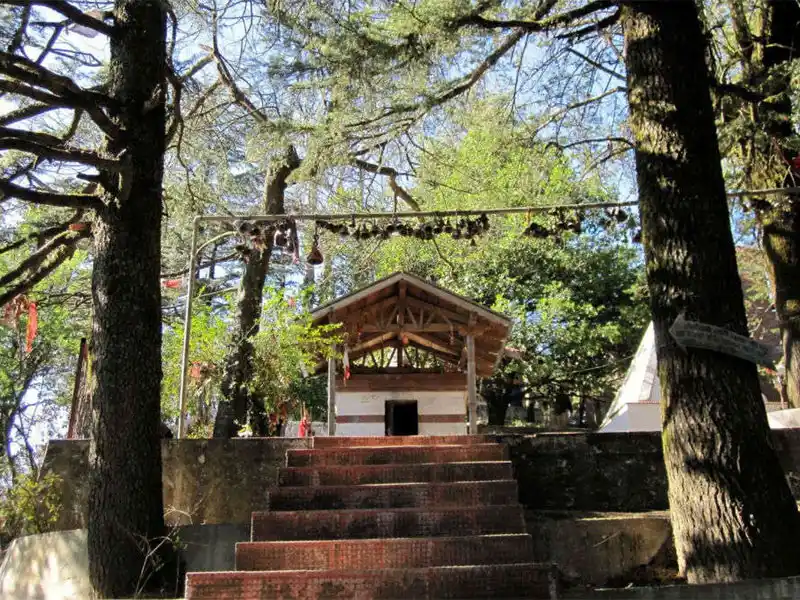
The temple is reported to open at about 6 am and close at about 7 pm daily, with morning and evening aarti at around 6:30, according to a 2026 Tusk Travel guide. Different guides give slightly different hours, and timings move with sunrise and sunset through the year. Two tips:
- Go for the morning aarti if you can. The light behind the temple at sunrise is the best of the day, and the steps are almost empty.
- Check the day before with your host or a local shop. On festival days the temple may stay open longer.
How to reach the temple
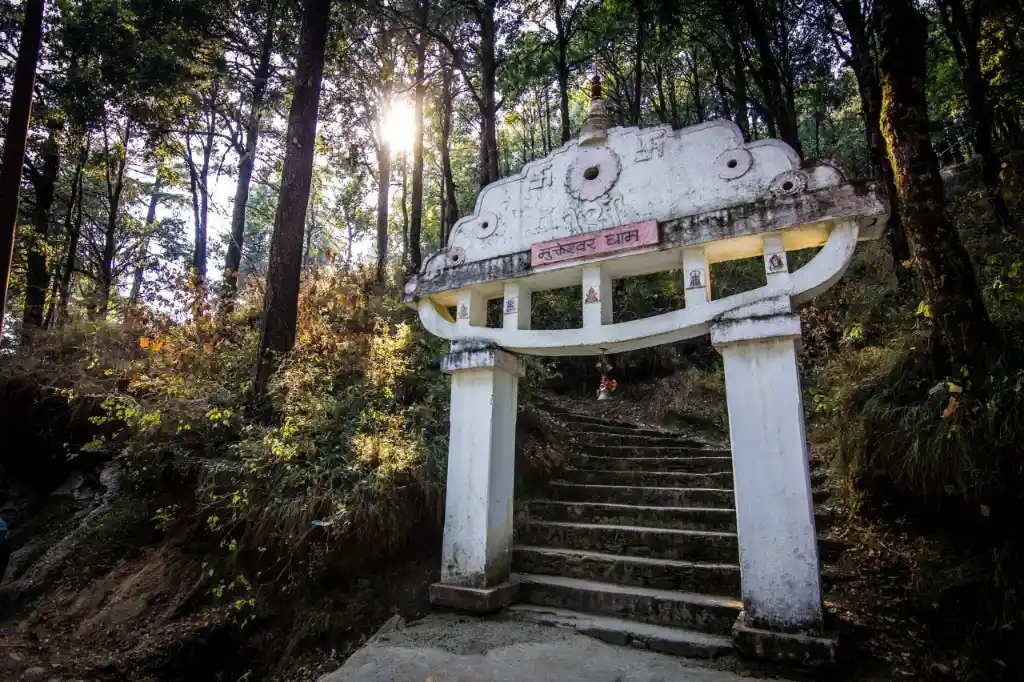
The temple sits on the top of the ridge above Mukteshwar market. Cars stop at the parking area below, and the last stretch is on foot up a flight of stone steps (roughly 100, depending on where you start). The climb takes 5–10 minutes for most people. There’s no ropeway or vehicle road to the top.
Coming from further away? Mukteshwar is about 340–350 km from Delhi, 65–70 km from Kathgodam station and 46–50 km from Nainital. Our guide on how to reach Mukteshwar from Delhi covers trains, roads and taxis.
For older visitors: the steps are uneven and have no lift. Take them slowly with a stick, pause when you need to, and go in the morning when it’s cool and quiet.
When to visit (and when to avoid)
| Time | What to expect |
|---|---|
| Sunrise to 9 am | Quiet, cold, best light and mountain views |
| 9 am to 11 am | Comfortable; a few visitors |
| 11 am to 3 pm (weekends) | Day-trippers from Nainital; short queues |
| Late afternoon | Good light on Chauli Ki Jali; quieter again |
| Maha Shivaratri | Very crowded; festive; plan to park early |
| Shravan (July–August) | Devotees on Mondays; rain and fog likely |
For mountain views behind the temple, October to February is best. The air is clearest after the monsoon, and the Nanda Devi and Trishul peaks often show on winter mornings. Our Mukteshwar weather and best time guide has month-by-month temperatures.
Festivals at Mukteshwar temple
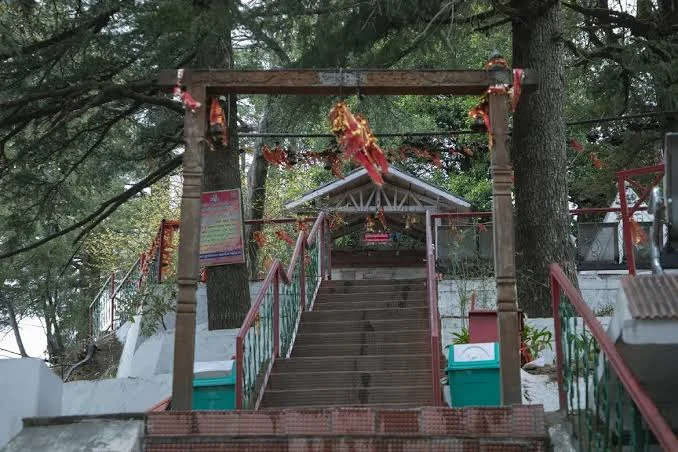
- Maha Shivaratri (February or March): the temple’s biggest day. Devotees arrive from across the region, the steps are crowded from early morning, and many families also visit Chauli Ki Jali. Park early and expect a slow climb.
- Shravan (July–August): Mondays in the month of Shravan are sacred to Shiva and draw devotees despite the monsoon rain.
- Navratri: busier than usual, with special prayers.
Festival dates follow the Hindu lunar calendar, so they shift each year. If you want a quiet visit, check the dates and avoid them. If you want to see the temple at its most alive, go on Maha Shivaratri, but stay overnight in Mukteshwar so you aren’t driving the hill road in the festival traffic.
What to wear and temple etiquette
- Dress modestly and carry a warm layer; the ridge is windy and cold in the mornings, even in summer.
- Shoes come off before the temple. Stone floors are icy in winter, so wear thick socks.
- Photograph respectfully. Avoid photographing inside the sanctum or during aarti, and ask before photographing people.
- Keep it quiet. It’s a working temple, not a viewpoint, even though the view is spectacular.
- Watch for monkeys around the offerings; don’t hold food in your hand.
What to see next door
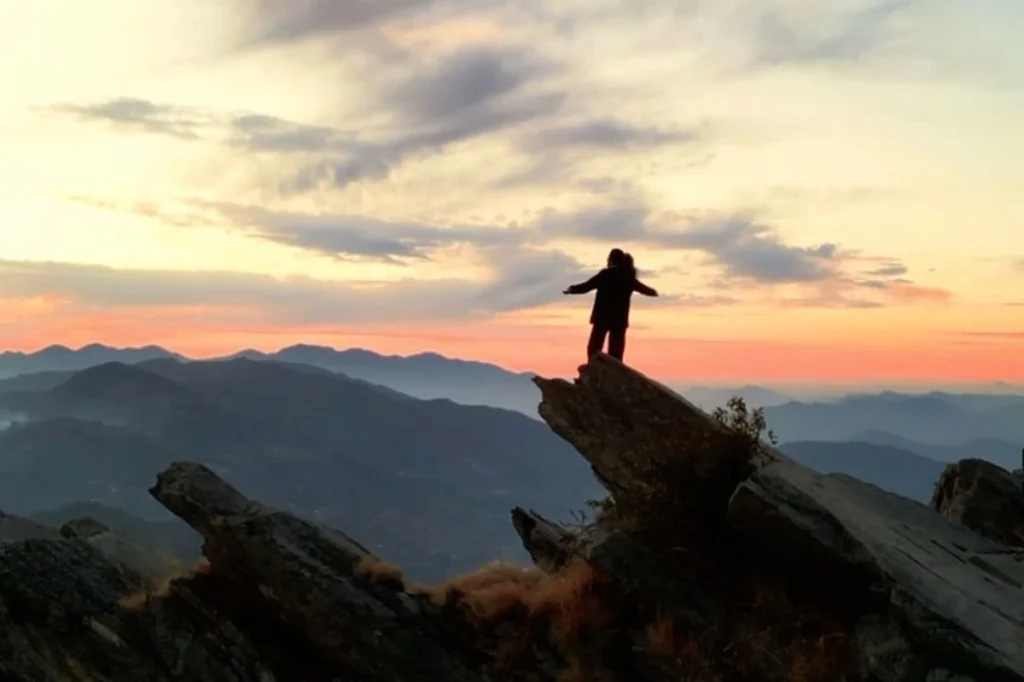
Chauli Ki Jali
A two-minute walk from the temple, Chauli Ki Jali is a cliff edge with rock formations and a sheer drop into the valley. Local operators run rock climbing and rappelling here in dry weather. Stay behind the railings with children; the rock is slippery after rain.
The IVRI campus road
The British-era stone buildings and pine-lined road of the IVRI campus make a pleasant 30-minute walk after your temple visit. Most of the institute is a working research facility, so stick to the road.
Further afield
The rest of the area, from Sitla and Bhalu Gaad waterfall to Ramgarh and Jageshwar, is in our guide to places to visit near Mukteshwar.
A simple morning plan
- 6:00 am: Walk up for sunrise and the morning aarti.
- 7:00 am: Chauli Ki Jali in the early light.
- 8:00 am: Tea in the market, then breakfast at your stay.
- 10:00 am: IVRI campus road walk, or a drive to Sitla.
If you’re looking for breakfast or lunch nearby, see where to eat in Mukteshwar.
Three common mistakes
- Arriving at noon on a weekend and finding the steps busy and the view hazy. Mornings are better on both counts.
- Forgetting a warm layer. The ridge is windy all year, and the stone floor inside is cold underfoot.
- Leaning over the edge at Chauli Ki Jali for a photo. The drop is sheer and the rock is smooth; stay behind the railings.
Staying close to the temple
If you want to make the sunrise aarti, stay in Mukteshwar itself rather than driving up from Nainital. Our Nature Home has Himalayan-view rooms (from ₹3,500 a night) and serves home-cooked food, and A Cottage by Saanjh Stays has AC rooms and an in-house restaurant (from ₹5,000). Compare options for a Mukteshwar homestay.
How we put this together
We combined published sources on the temple’s age and history (Wikipedia, travel guides) with our local experience in Mukteshwar. Temple timings vary between sources and through the year, so we’ve given them as reported and recommend confirming locally. Legends are presented as local belief, not historical fact.
Disclosure: Saanjh Stays runs Nature Home and A Cottage in Mukteshwar.
FAQs
Mukteshwar Dham temple is reported to be open from about 6 am to 7 pm daily, with aarti around 6:30 am and 6:30 pm. Timings can change with the season, so confirm locally the day before.
No. Entry to Mukteshwar Dham temple is free for all visitors.
The Mukteshwar Shiva temple is about 350 years old, according to Wikipedia and most travel sources.
There are roughly 100 stone steps from the parking area to the temple, depending on where you start. The climb takes 5–10 minutes for most visitors.
The temple stands at the highest point of Mukteshwar ridge in Nainital district, Uttarakhand, on the IVRI campus, about 46–50 km from Nainital.
Local legend says Lord Shiva fought a demon on this ridge and granted him liberation (mukti) after defeating him. The name Mukteshwar means “lord of liberation”.
Visit at sunrise, ideally between October and February, for clear mountain views and an empty temple. Avoid weekend middays and Maha Shivaratri if you want quiet.
Yes, with care. The steps are uneven and there’s no lift, but the climb is short. Go slowly in the cool morning and pause when needed.
Chauli Ki Jali, a cliff with rock formations used for rock climbing and rappelling, is a two-minute walk away. The IVRI campus road and its British-era buildings are next to the temple.
Photography outside the temple and of the view is common. Avoid photographing inside the sanctum or during aarti, and ask before photographing people.
Sources
- Wikipedia – Mukteshwar (temple age, IVRI history, Jim Corbett)
- Tusk Travel – Mukteshwar Temple, Nainital: history, timings and tips
- Saanjh Stays – Nature Home, A Cottage
About the author
[Author name], [role] at Saanjh Stays. [One line on hosting guests in Mukteshwar.] Saanjh Stays runs Nature Home and A Cottage in Mukteshwar, plus private villas in Ramgarh, Umagarh and Bhimtal.